Sound came into my life through Chrystal, and it has kept arriving ever since, nearly always as a gift. Each instrument carries the person who gave it.
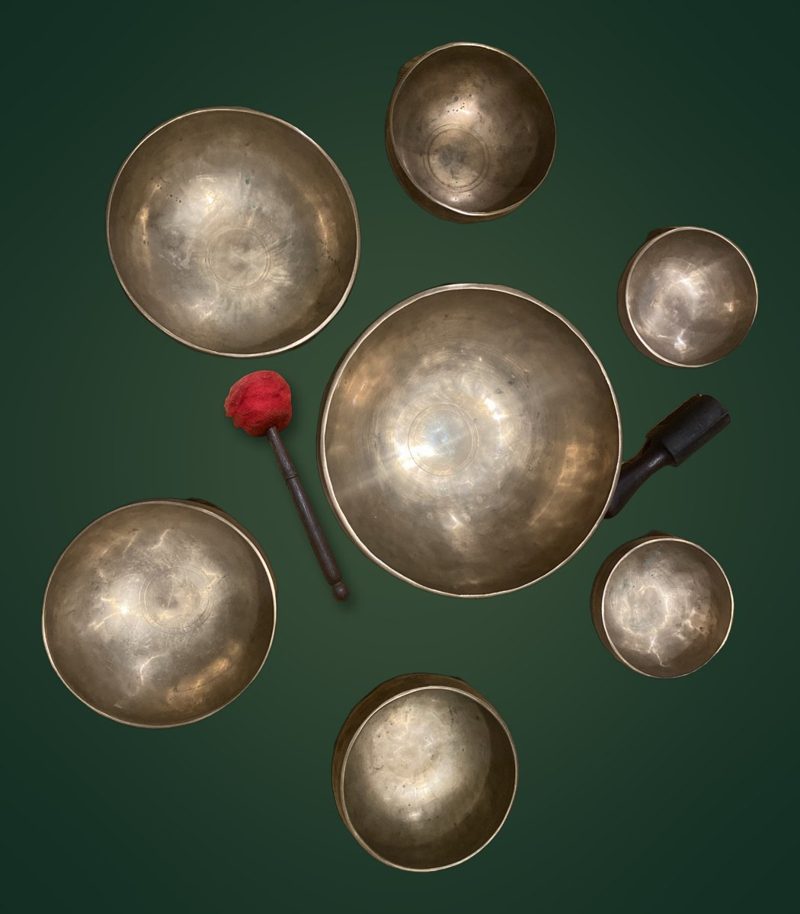
The bowls. Singing bowls are linked with Tibet and the Himalaya, though their exact history is debated. Each bowl carries its own frequencies, layered over a low, humming tone that seems to hang in the air. In sound healing, bowls of different sizes and notes are often matched to different chakras, and many people feel the hum ease them into a still, trance-like state. I play seven. Chrystal's three were the first. One of them later broke, and it's now my ceremony bowl, the one I use for smudging and for burning letters and anything else I need to release. The others belong to my old neighbour, Rich.
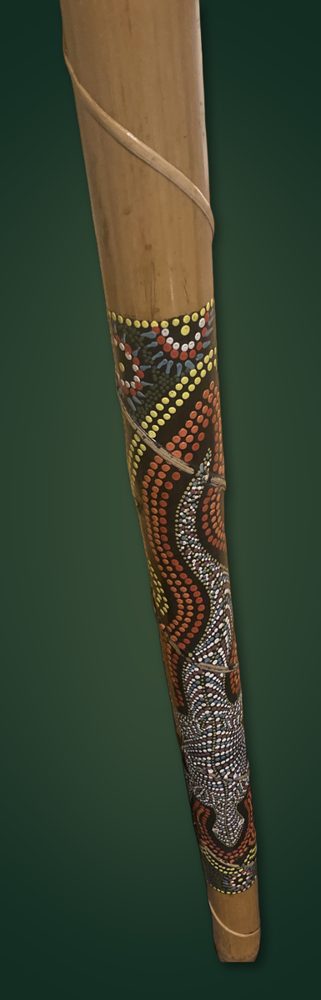
Rain stick and tingsha bells. The rain stick is traditionally linked with Chile and Peru, where it's said to have been played to call the rain, and mine is Australian-made. In sound healing it carries the element of water, linked with flow, release and letting go, and many people feel their body and nervous system soften and settle as it plays. The tingsha bells come from Tibet, where they're used in Buddhist prayer and ritual. In sound healing their clear, bright ring is said to cut through heavy energy and clear a space, and they're often used to mark beginnings and endings. Both are also from Rich, the same generous neighbour.
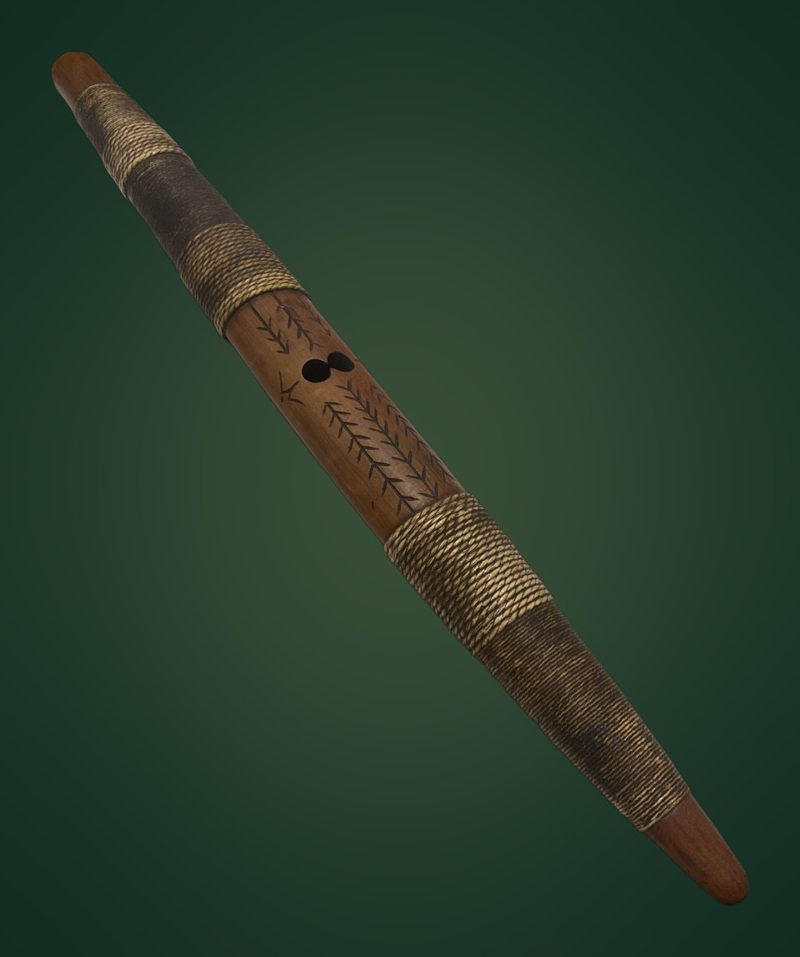
Pūtōrino. The pūtōrino is unique to Aotearoa. It's shaped like the cocoon of the case moth, home of Hine Raukatauri, the atua of flute music, who loved her flute so much she chose to live inside it. It has a male, trumpet-like voice and a female voice that can sound like a cry. Some also have a third voice, from the hole in the middle, said to belong to Raukatauri's daughter Wheke, who is heard but never seen. Kiri is a carver and a distant cousin around my age. We met online sharing whakapapa, as we both descend from Daniel O'Keefe and Ihipera Turi of Mohaka. During a really hard time in my life, a little cylinder-shaped package arrived from her. I thought it would be papers, but out fell this beautiful pūtōrino, one of the taonga pūoro of Aotearoa. I had no idea what it was, so I messaged her to say thank you and ask. She told me. There's a story that the patupaiarehe, the fairy folk of the forests and misty mountain tops, were expert players of the pūtōrino. Kiri has since gifted me other taonga pūoro too.
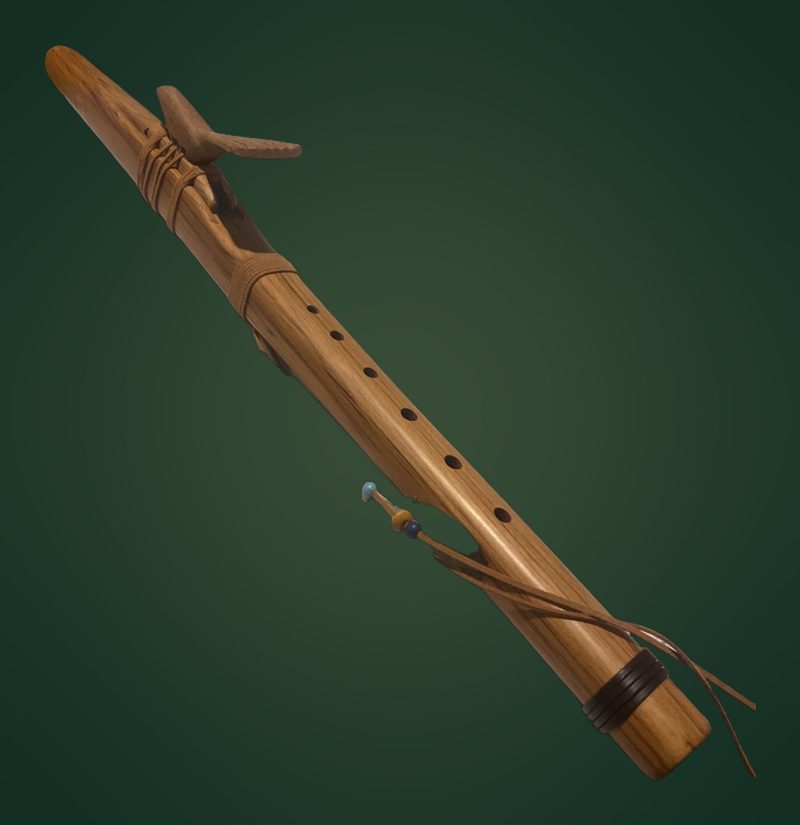
Native American-style flute. A flute in the style of Turtle Island. A Lakota story tells of a young hunter, lost in the forest, who heard the wind singing through holes a red-headed woodpecker had drilled in a cedar branch, and from that came the first flute. Traditionally it was played mostly for courting and love songs, and some peoples also used it for healing and prayer. In sound healing, as a wind instrument, it carries the element of air, said to bring lightness, clarity and movement to a space. Mine is tuned to F, the note linked with the heart chakra in sound healing, and as a breath instrument it's also linked with the throat chakra and expression. Many people feel its soft, breathy voice open the heart. Mark had told me for a long time that he wanted to make me a flute. He gave it to me during a tender time, when I'd gone to sit with him and hold space. He had already gifted me a shaker.
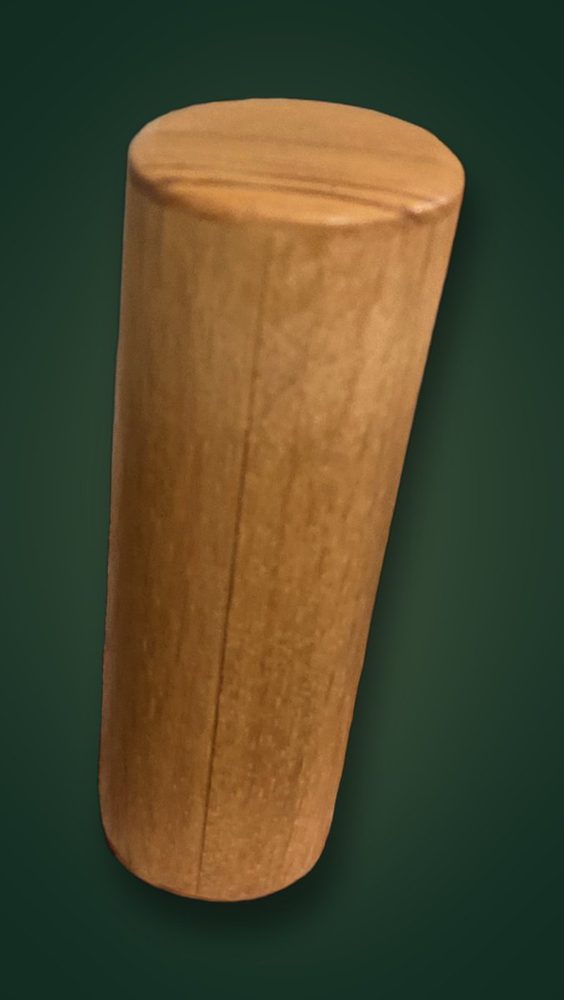
Shaker. The shaker is one of the oldest instruments of all, played by peoples right around the world, often made from gourds, seeds or stones. In sound healing and ceremony, rattles are said to scatter stagnant energy and wake up a space. I use mine to clear and move energy, and many people feel its steady rhythm carry them inward.
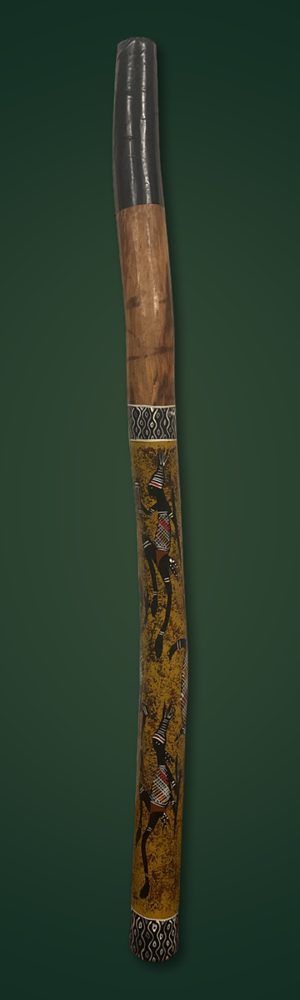
Didgeridoo. From the original peoples of Australia, in the north of the country. In north-east Arnhem Land the Yolŋu call it yidaki. It's made from eucalyptus hollowed out by termites, and rock paintings of it have been dated to between 1,000 and 1,500 years ago. It's played with circular breathing, so the deep drone never stops. In sound healing that low drone is linked with the sacral and root chakras, and many people feel it move through the lower body, grounding them and carrying them into a trance-like state. Mine is an Australian didgeridoo, gifted by my close friend Bob, a Scotsman, to a Māori. It's well travelled.
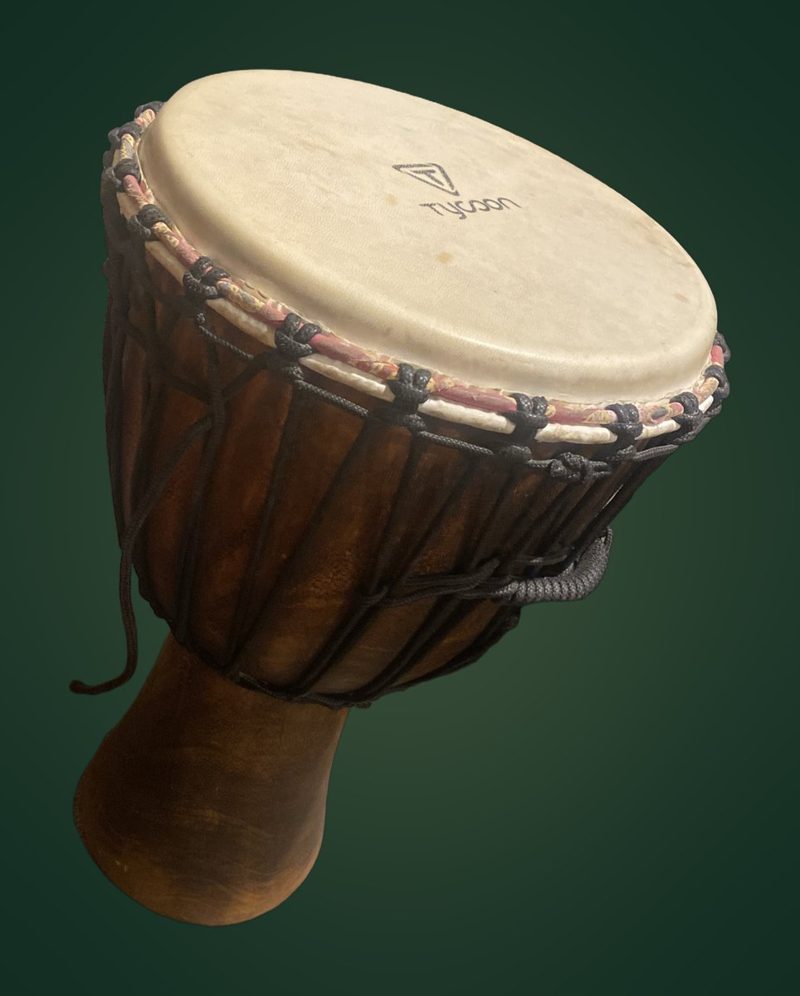
Djembe. From West Africa, from the Mandé peoples of what is now Mali and Guinea. Its name is often said to come from a Bambara saying, "anke djé, anke bé", which means "everyone gather together in peace". It's the drum of community and celebration. It has a hard beat that can go slow or fast, so it sets the tempo and leads the journey. In sound healing the drum is often linked with the heartbeat, the earth and the root chakra, and many people find a steady beat settling and grounding, carrying them into a deep, trance-like place. Gifted to me by Soph.
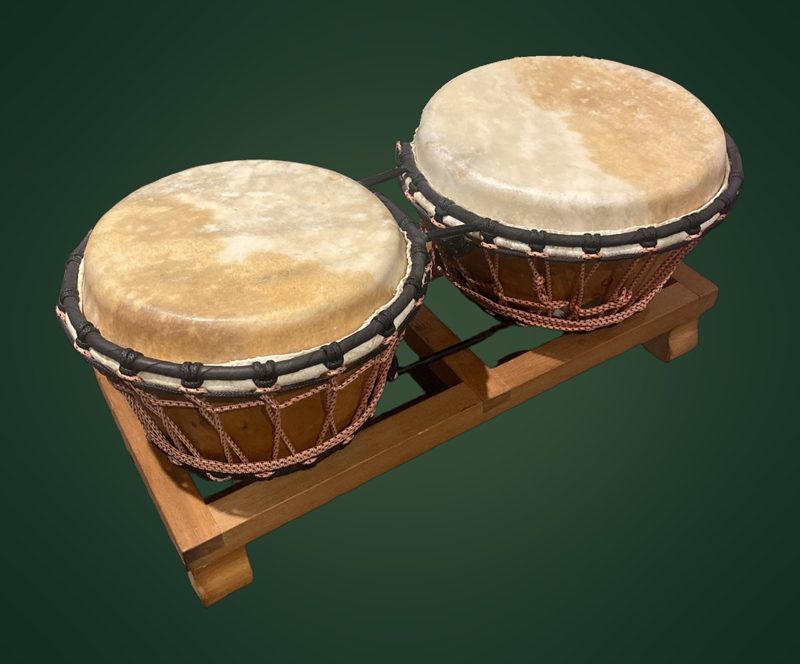
Along with a couple of drums I found along the way, these are the instruments I play in my soundscapes. The bongos I bought myself, and they’re part of my set too.